



Groundbreaking Rural Revitalization: Haique Village Benefits from Panyu-Hezhang Alliance and Jinan University Support
Date:September 29, 2025
Publisher:Yangcheng Evening News
To gain deeper insight into the progress of targeted assistance provided to Hezhang County by the Central United Front Work Department, Guangzhou Municipality, and Jinan University, a research team led by Professor Lu Wengang – Dean of the Institute of Bay Area International Smart Emergency and Security Development and the Institute of Party Building and Public Safety Governance at Jinan University – recently conducted field research and assistance activities in Haique Village, Hezhen Yi and Miao Ethnic Township, Hezhang County, Bijie City, Guizhou Province. The initiative was coordinated by the University’s Rural Revitalization Office and the United Front Work Department of Hezhang County.
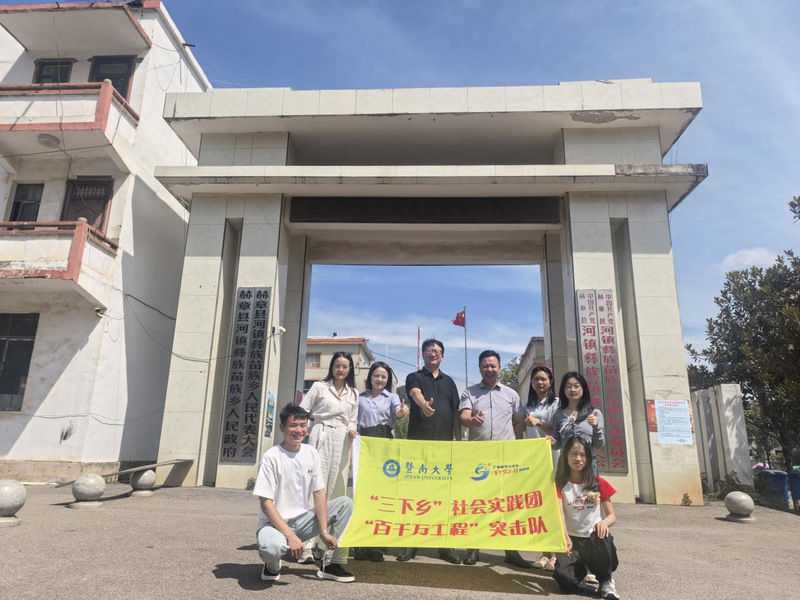
The team observed that although Haique Village achieved full poverty alleviation in 2016, it continues to face multiple development challenges, including weak infrastructure, the need for improved living conditions, insufficient industrial support, a mono-structure economy, and underutilized resources that have yet to be transformed into development advantages.
Since 2020, Panyu District of Guangzhou and Hezhang County have collaborated closely to identify pathways for Haique’s development, exploring an integrated approach combining environmental enhancement, cadre training, and rural revitalization. This effort has helped accelerate the village’s transition from poverty alleviation to sustainable revitalization.
Improving Infrastructure for a Harmonious and Beautiful Countryside
Efforts have focused on upgrading homestays to accommodate participants in cadre training programs. Ten new standardized homestays have been built, with a total floor area of 2,328.7 square meters, while 16 rural houses have been modernized, covering 2,890.3 square meters. Environmental improvements include the renovation of a 2-kilometer industrial road and embankments, and the construction of 3 kilometers of river dykes to ensure reliable access to water, electricity, roads, and communications. In addition, one garbage truck and 20 waste containers have been provided, establishing a “village collection, township transport” household waste management system.
To preserve local heritage, the village has restored a cluster of houses representing five generations of housing evolution – from rudimentary shelters to modern dwellings – creating a “Haique Memory” restoration zone that showcases the village’s remarkable transformation.
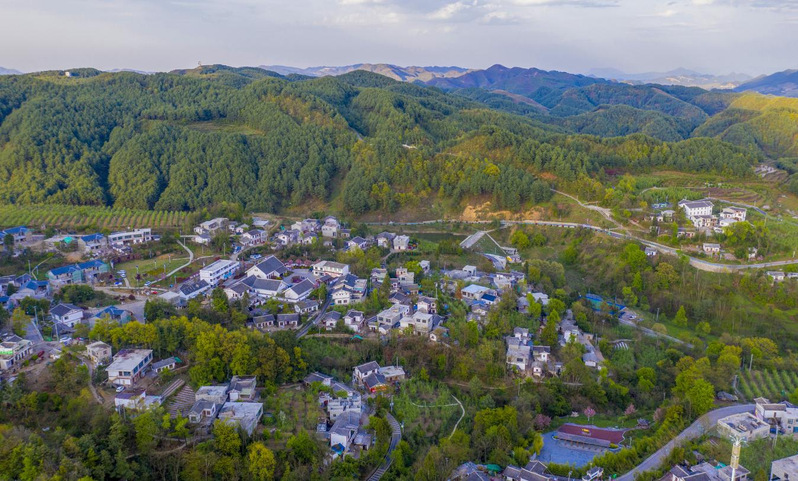
(New Appearance of Haique Village, Hezhang County)
Developing a Teaching Base to Boost Integrated Agri-Cultural-Tourism Development
The Haique On-site Teaching Base, established in 2020, is one of five key party spirit education bases designated by the Guizhou Provincial Organization Department. From 2023 to 2024, Panyu District invested 7.5 million yuan in east-west collaboration funds to construct a new training complex and supporting facilities, expanding trainee capacity from 100 to 250.
The base adopts a distinctive training model, emphasizing “learning amidst the forests, boarding with local families, experiencing rural life firsthand, and learning directly from villagers.” It aims to build a nationally recognized cadre training brand.
Through a “base + cooperative + farmers” operational model, 27 households have contributed their homestays to the cooperative, which manages them collectively. Participants receive 15% of the training revenue as dividends, while the village cooperative receives 5%. The model has also spurred the growth of agritourism, local employment, the cultivation of medicinal herbs and mushrooms, and the sale of specialty agricultural products, steadily raising villagers’ incomes.
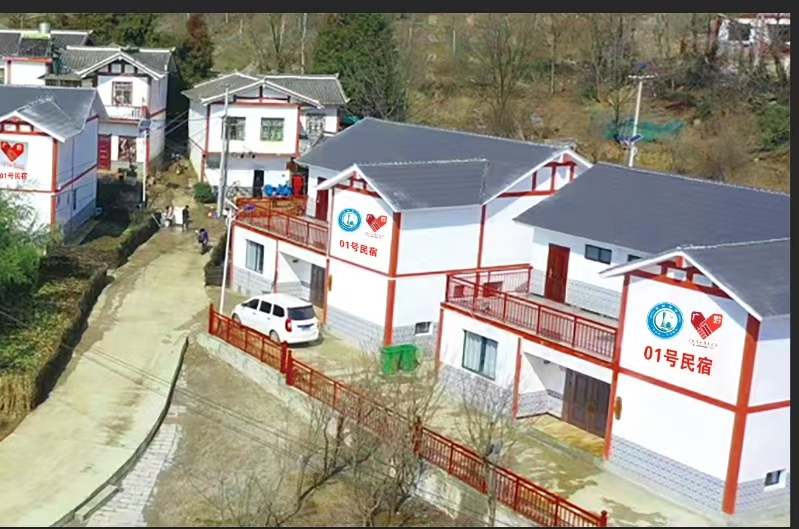
(Panyu District Helps Renovate Homestays)
“Three Togethers” Practice Enhances Two-Way Talent Development
The “Three Togethers” program – which involves cadres eating, living, and laboring alongside local residents – deepens ties between officials and the public while strengthening party spirit. Trainees take part in farming, animal husbandry, and forest patrols, drawing on local resources such as the heritage restoration area, the Wen Chaorong Spirit Exhibition Hall, and the vast forest planted by the village.
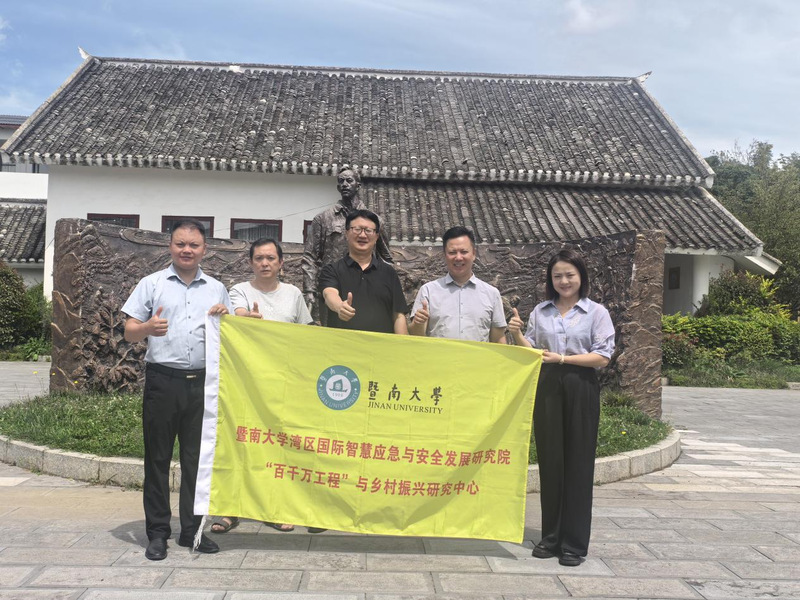
Meanwhile, Panyu District supports training programs in Guangdong for rural revitalization cadres from Hezhang, enhancing their political awareness and professional capabilities through annual east-west collaboration funding.
In summary, the collaboration between Panyu and Hezhang has effectively addressed development bottlenecks in Haique Village by leveraging local resources and adopting targeted, innovative approaches. These efforts have consolidated poverty alleviation achievements and opened new prospects for coordinated regional development through east-west collaboration.
(2025-09-13)
NEWS
- About the University
- Quick Links

Copyright © 2016 Jinan University. All Rights Reserved.